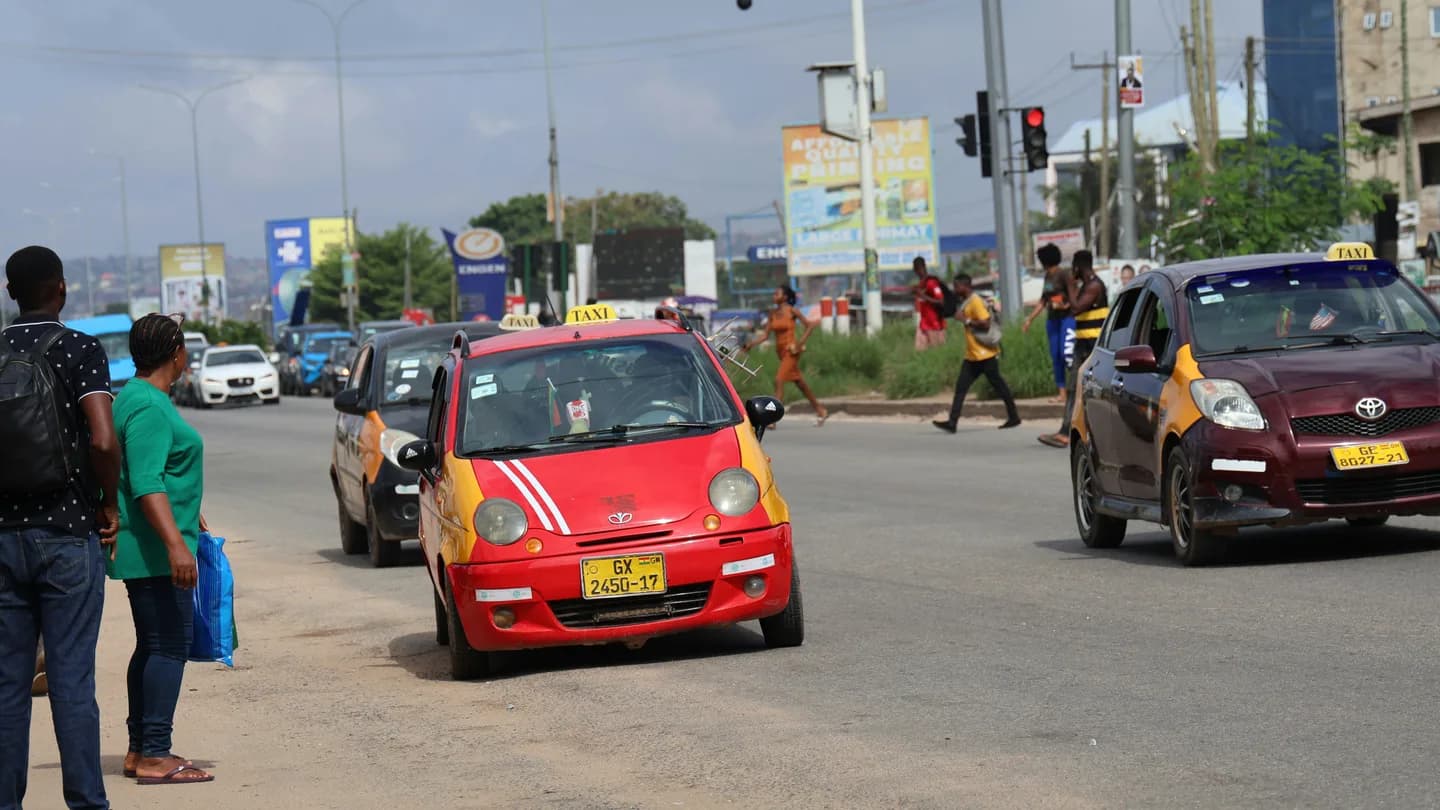
Ghana’s ride-hailing debate is about who records the ride
Airport taxis, app-based drivers, tax reporting and commission pressure all point to the same missing layer: verified trip evidence.
May 11, 2026·4 min read·Ghana
GHANA · GH
REF GHANA-RIDE-PROOF · 2026-05-11
POPULATION
35.9 million2026 · UN WPP 2024 projection
INT'L ARRIVALS
~1.3 million international arrivals2023/2024 latest reported · Ghana Tourism Authority / tourism ministry reporting, verify final annual table
DRIVER COUNT
~150,000 taxi / trotro / ride-hailing driverslatest available
Ghana’s transport trust problem is not only about whether a passenger chooses a yellow taxi, an airport taxi, Uber, Bolt or Yango. It is about what can be proven when the ride becomes physical.
At the pickup point, the app screen is no longer enough. The passenger needs a verifiable link between driver, vehicle, fare context and route. The driver needs protection against unpaid distance, false complaints, unclear app responsibility and economic pressure. The airport, hotel, regulator and tax authority all need a clearer picture of the transport event that actually took place.
That makes Ghana relevant to SafetyRide: a growing digital transport market where the missing layer is not another app, but better evidence that helps serious airport taxi operators, responsible app-based drivers and regulators see the same ride.
The airport is where trust becomes physical
Kotoka International Airport already has a formal transport structure. Ghana Airports Company Limited lists an airport taxi service operated by Labour Enterprise Trust Co. Ltd., with metered taxi charges from the airport. It also lists public pool taxis, where fares are not predetermined and passengers can bargain.
That mix is important. It shows both structure and negotiation. A metered airport taxi can create price logic. A public pool taxi can create flexibility. A ride-hailing app can show a fare before acceptance. But none of those elements alone proves the full physical event: who approached the passenger, which vehicle was entered, where the pickup happened, whether the agreed fare matched the trip, and whether the driver and vehicle were the ones the passenger believed they were using.
For visitors, this is where destination trust begins. Several visitor guides and travel blogs warn about taxi overcharging, airport fare confusion and unsolicited approaches in Accra. These sources should not be treated as hard statistical evidence. They are perception signals. They show what travellers are told to watch for before arrival, and how repeated stories can shape confidence at the curb.
A few bad actors can damage trust far beyond the individual ride. They can make serious drivers, airport operators, hotels and local transport providers look less trustworthy than they are.
App transport also needs a real-world record
Ghana’s ride-hailing market is not outside the accountability debate. It is part of it.
has been tied to , including platform-related obligations, driver licence verification, vehicle permits and information searches for digital transport operators. Ghana has also extended transport-related tax reporting into the ride-hailing space. announced that ride-hailing vehicle owners should pay quarterly Vehicle Income Tax, and asked ride-hailing companies to update their platforms to integrate the new requirements.
This is the right policy direction: app-based transport cannot remain invisible simply because the booking is digital. But tax reporting and licensing still answer only part of the question. They can say that a vehicle owner has obligations. They can say a platform has data. They do not necessarily create a neutral, trip-level evidence layer that links the driver, vehicle, passenger handoff, route, fare context, time and incident record.
That evidence gap matters because the transport event is also an economic event. If the ride cannot be clearly documented, then fare disputes, tax questions, driver complaints and passenger complaints become harder to resolve fairly.
Drivers are asking who carries the cost
In April 2026, the Association of Online Drivers petitioned President John Dramani Mahama over what drivers described as high trip charges. Citi News reported that the association said platform commissions had risen from 10 percent to as high as 30 percent over time. The association also pointed to long unpaid pickup distances, with some ride requests requiring drivers to travel many minutes before the paid trip begins.
This is not only a labour issue. It is a trust issue.
When drivers feel that the app controls passenger access, pricing logic and complaints while they carry fuel, maintenance, time and safety risk, the market becomes fragile. Passengers may see a clean app price. Drivers may see an uneconomic trip. Regulators may see a taxable activity. Hotels and airports may see a visitor handoff. Each party sees part of the event.
SafetyRide’s relevance is that these parts need a shared evidence layer. Not a layer that sets fares or takes over dispatch, but one that helps prove what happened.
Safety should protect both sides
The UK government’s Ghana travel advice says there have been isolated crime incidents in licensed taxis, minibuses and app-based taxi services, and advises travellers to use licensed taxis, check driver ID and vehicle condition, and consider hotel-arranged transport on arrival. That wording is careful, and the SafetyRide framing should be too.
This does not mean Ghanaian taxis or ride-hailing services are unsafe by default. Ghana is a major West African transport market with serious local drivers and operators. The point is that when unknown people share a vehicle, both passenger and driver deserve better evidence if something goes wrong.
A passenger may need to prove which car they entered. A driver may need protection from a false or unclear complaint. An operator may need evidence of service quality. A regulator may need to understand whether a ride was licensed, taxed and compliant. An insurer may later need the timeline after an incident.
Screenshots, receipts and app records are useful. But the physical ride needs its own proof.
Where SafetyRide fits
SafetyRide can help Ghana’s transport debate move from platform claims to reviewable ride context. It protects passengers and serious drivers by making the real journey easier to document without taking over the market.
Continue
Read more from SafetyRide.
Browse the rest of the articles, or get in touch about anything you read here.